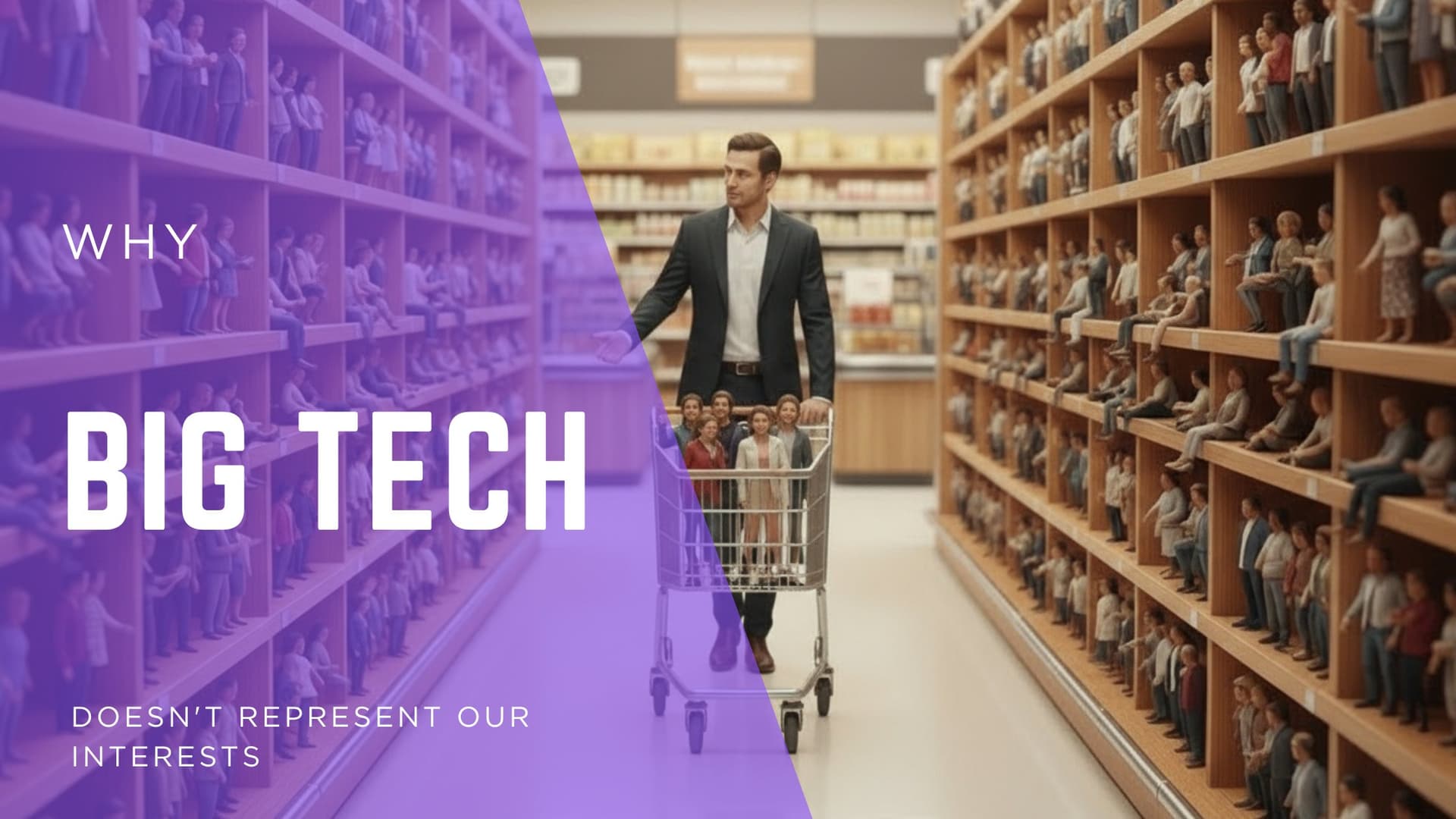
Why Big Tech Doesn't Represent Our Interests: The Trust Crisis
Imagine discovering that your most trusted advisor has been secretly profiting from decisions made against your best interests. That's essentially what millions of people are realizing about their relationship with technology platforms. While we've been clicking, scrolling, and sharing our lives online, believing these services work for us, a fundamental conflict of interest has been hiding in plain sight.
Recent polling reveals a striking shift in public perception. According to Pew Research, 78% of Americans now believe social media companies wield too much political power. Meanwhile, trust in AI companies has declined by 8 points globally since 2019, with 39% of respondents saying technological innovation is "poorly managed" (Edelman Trust Barometer, 2024). This isn't just statistical noise; it's evidence of a growing awareness that Big Tech's interests fundamentally conflict with user welfare.
What is a conflict of interest in tech? A conflict of interest occurs when technology companies' revenue models depend on actions that may harm users, such as maximizing engagement through addictive design features or collecting personal data without clear benefit to the individual user.
The Revenue Reality: When Users Become Products
Understanding why Big Tech doesn't represent our interests requires examining how these companies actually make money. Despite offering "free" services, the largest technology companies generate hundreds of billions annually through sophisticated data monetization strategies that rarely align with user welfare.
Google exemplifies this fundamental conflict. Over 80% of its revenue comes from advertising. To generate this revenue, Google must collect, analyze, and sell access to user data on an unprecedented scale. The mechanics are more invasive than most users realize. Google processes billions of search queries daily, tracking not just what people search for, but when, where, and how they interact with results.
Mozilla's research shows that the average person's data is worth approximately $1,200 per year to data brokers, yet users see none of this value. Their research shows that major tech platforms collect over 5,000 data points per user annually, creating detailed behavioral profiles that influence everything from loan approvals to job opportunities.
The Real-Time Bidding Machinery
Behind the scenes, tech platforms operate what the Electronic Frontier Foundation calls "the most pervasive surveillance apparatus in human history" through real-time bidding (RTB) systems. Every time you visit a website or open an app, your personal information — including location, browsing history, and demographic details — gets broadcast to potentially hundreds of advertising companies within milliseconds.
This process happens billions of times daily without user awareness or consent. Companies bid on your attention based on profiles they've built about your vulnerabilities, interests, and likely purchasing behavior.
The Addiction Economy: Designed for Dependency
Perhaps nowhere is the conflict of interest more apparent than in how platforms design their interfaces and algorithms. Technology companies employ teams of neuroscientists, behavioral psychologists, and addiction specialists — not to help users, but to make their products more compelling and harder to abandon.
Facebook's founding president Sean Parker later admitted: "The thought process that went into building these applications was all about: 'How do we consume as much of your time and conscious attention as possible?'" Features like infinite scroll, variable reward schedules, and push notifications are borrowed directly from casino design principles. The average American now checks their phone 96 times daily and spends over 7 hours staring at screens, much of it driven by design patterns optimized for engagement rather than user benefit.
Internal research at Facebook showed the company understood its algorithms could harm users' mental health, particularly teenagers, but chose not to address these issues because reducing engagement would impact advertising revenue.
The Trust and Safety Illusion
Recent congressional disclosures revealed how little priority tech companies actually place on user welfare. Despite public statements about prioritizing safety, most major platforms have actually reduced their trust and safety teams. Twitter/X cut its trust and safety staff from 3,317 employees in 2022 to 2,849 in 2023. Discord reduced its safety team from 90 employees in 2023 to 74 in 2024, despite growing user bases and increased safety concerns.
These cuts occurred even as platforms faced increased regulatory scrutiny and ahead of the 2024 presidential election, when misinformation and harmful content typically surge. The message is clear: when companies must choose between user safety and profit margins, safety gets cut first.
Control and Dependency: The Platform Lock-In Strategy
The conflict between user interests and platform profits becomes most apparent in how companies deliberately create dependency relationships. Apple exemplifies this through its "walled garden" approach. Once users invest in Apple's ecosystem — purchasing apps, storing photos in iCloud, and connecting with family through iMessage — switching to alternative platforms becomes prohibitively expensive and complicated. Apple then leverages this dependency to extract fees from developers and users alike, charging up to 30% on all App Store transactions.
Social networks create perhaps the strongest dependency relationships through network effects. Facebook becomes more valuable as more friends join, making individual departure costly even when users disagree with company policies. This dependency allows platforms to gradually erode user protections, confident that the social cost of leaving exceeds the privacy cost of staying.
Breaking Free: Toward Aligned Interests
The good news is that the current system isn't inevitable. Technology can be designed to align company interests with user welfare, but this requires fundamental changes to how digital services are structured and funded. Decentralized technologies present another path forward. Blockchain-based systems, peer-to-peer networks, and open-source alternatives can reduce dependence on centralized platforms while giving users greater control over their data and digital experiences.
This is where initiatives like QANAT become crucial. By creating technology that returns data sovereignty to individuals and communities, we can begin building digital infrastructure aligned with user interests rather than extractive business models. The vision involves platforms that transparently serve users, where privacy is default rather than premium, and where individuals maintain control over their digital lives.
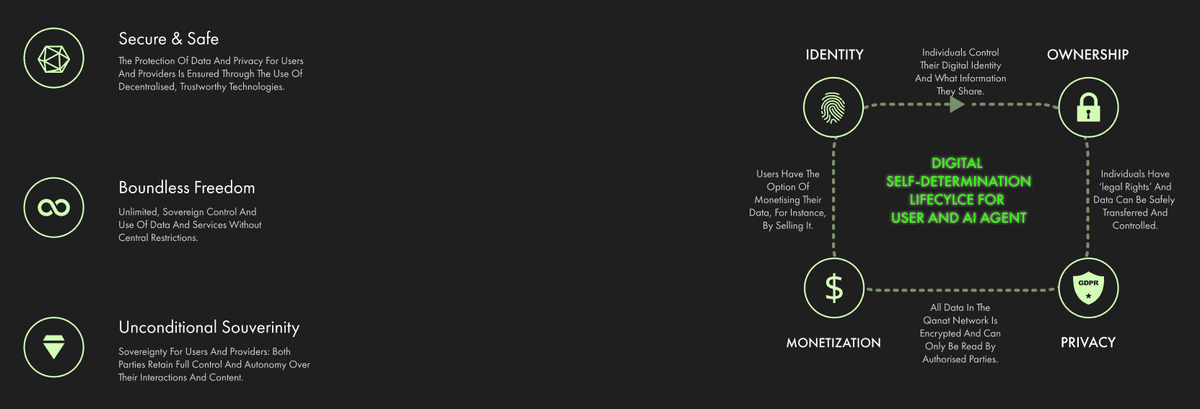
If you want to dive deeper, QANAT shows you how decentralized identity systems can align technology with user interests, creating sustainable alternatives where privacy and user empowerment drive platform success rather than undermine it.