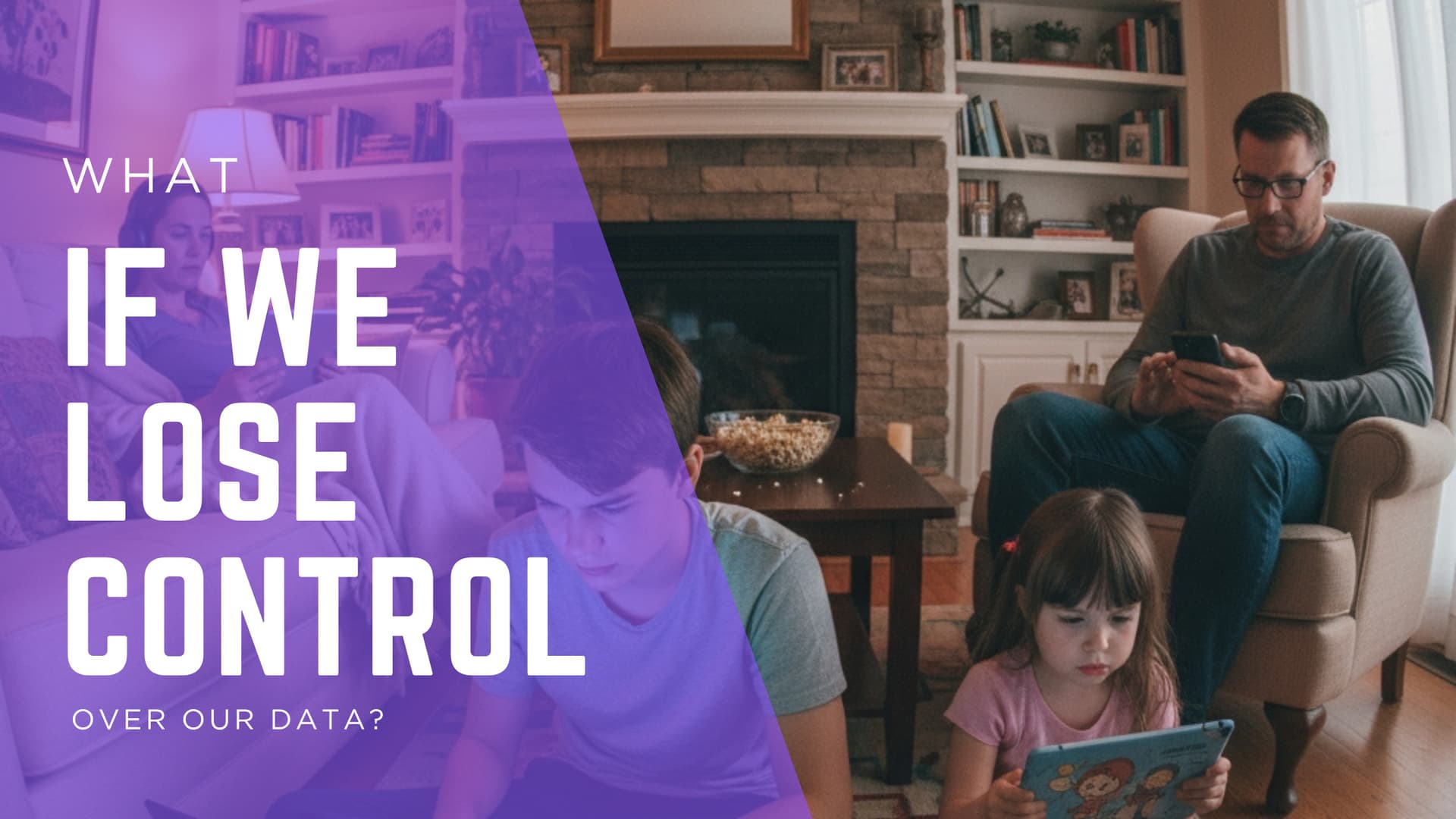
Future Visions: What If We Take Control of Our Data? And Potential Risks If We Don't.
Picture this: You wake up in 2030 and your personal assistant, running on QANAT's WEB X. decentralized operating system, greets you with an empowering message. "Good morning, Sarah. Your privacy score has increased to 98% this month through your participation in the sovereign mesh network. Today's opportunities include three research collaborations that value your encrypted health insights, earning rewards of $5–15 for contributing anonymized data patterns. Your system has unlocked premium services from five community businesses — all while keeping your identity completely under your control."
Your smart home operates through your self-sovereign QANAT identity, seamlessly connecting to thousands of decentralized applications through WEB X. OS without any corporate intermediaries tracking your behavior. When you choose to share your energy usage patterns with the community grid, you earn small credits while helping optimize renewable distribution. Your car's navigation system suggests routes optimized by community data pools — information you contribute voluntarily while maintaining complete anonymity.
This scenario isn't utopian fantasy — it's the emerging reality that QANAT is building as technology for self-determined generations. Our vision is a future where the internet is more intelligent, fair, and immersive for everyone, where young people grow up with digital sovereignty as their birthright rather than corporate surveillance as their default.
What is data sovereignty? Data sovereignty is a model where individuals and communities maintain ultimate control over their personal information, deciding how it's collected, used, and shared through decentralized technologies that eliminate single points of control or failure — creating a more intelligent, fair, and immersive internet for self-determined generations.
The path toward a self-determined digital future is promising — but powerful groups that benefit from today's extractive system stand in the way. Surveillance, corporate monopolies, and manipulative algorithms could leave young people with less freedom. This article shows how QANAT's WEB X. OS opens the door to digital self-determination — and what dangers we must avoid.
The Positive Vision: QANAT's Empowered Future
By 2028, the concept of corporate-controlled operating systems has become as obsolete as feudalism. Communities operate on QANAT's WEB X. decentralized operating system, where individuals access thousands of privacy-preserving applications without any corporate intermediaries collecting their data. Your daily digital interactions run through WEB X.'s sovereign protocols — messaging friends through encrypted channels, accessing decentralized social networks, managing finances through peer-to-peer systems, and creating content on platforms you actually own.
The transformation happened through grassroots adoption of QANAT's WEB X. OS as the alternative to Big Tech operating systems. The 2026 Digital Rights Protection Act established legal frameworks recognizing the right to digital sovereignty through decentralized operating systems. By 2027, cities worldwide had implemented WEB X. OS-powered municipal networks that demonstrated how technology could empower communities rather than exploit them.
In this future, your data works for you rather than against you. Creativity explodes as artists earn directly from audience engagement data without platform censorship. Innovation accelerates because inventors can share insights through QANAT's protocols while protecting intellectual property. Social trust strengthens as people engage authentically, knowing their data remains private yet valuable.
The Dark Path: Two Scenarios We Must Avoid
Yet this empowering future faces existential threats from entrenched interests who profit from current exploitation models. Without decisive action, we risk sliding into dystopian scenarios that would make data sovereignty impossible forever.
Scenario 1: The Surveillance State — Total Transparency, Zero Compensation
By 2029, comprehensive monitoring has eliminated both privacy and data compensation. Every connected device feeds into vast government surveillance networks that make China's current social credit system look primitive. Your morning routine generates detailed behavioral profiles used to predict and preempt dissent, but you receive nothing for this valuable data that corporations and governments monetize extensively.
The transition happened gradually through manufactured crises. The 2026 "Cyber9/11" attack justified emergency surveillance powers that were never repealed. The 2027 climate crisis required "smart monitoring" systems that tracked every aspect of daily life. Each crisis normalized deeper extraction until surveillance became unremarkable.
In this future, facial recognition cameras blanket every space while sophisticated AI monetizes your biometric data for corporate clients. The most insidious aspect is economic: your data creates immense value that enriches surveillance capitalists while impoverishing you. Every click, movement, and interaction generates revenue streams that flow upward to tech oligarchs while citizens become increasingly dependent on "free" services that extract exponentially more value than they provide.
Scenario 2: Corporate Digital Feudalism — Walled Gardens of Extraction
In this 2030 future, five major technology conglomerates have divided digital reality into exclusive ecosystems that extract maximum value from user data while providing minimal services in return. Citizens must choose their digital lord: the Apple Kingdom extracts premium lifestyle data; the Google Empire monetizes comprehensive behavioral information; Amazon Realm profits from every commercial interaction; Meta Metaverse harvests social and emotional data; Microsoft Enterprise extracts productivity and professional information.
Each corporation operates like a feudal system, providing basic services while extracting massive value from user data that creates wealth exclusively for shareholders. The most tragic aspect is how innovation dies as each realm optimizes for data extraction rather than user empowerment. Cross-realm cooperation becomes impossible as corporations hoard user data as competitive advantages.
The Present Reality: Choosing Our Digital Future
These scenarios aren't inevitable futures but warnings about trajectories we can still change. The critical window for action is narrowing rapidly as surveillance infrastructure becomes entrenched and behavioral control systems grow more sophisticated. However, the technology needed to preserve human agency and digital freedom exists today through platforms like QANAT's WEB X. OS.
Decentralized identity systems, end-to-end encryption, and privacy-preserving computation offer technical foundations for digital sovereignty. Legal frameworks like the EU's AI Act and emerging US state privacy laws provide regulatory models for constraining surveillance capitalism. The key insight from successful privacy movements is that change requires both individual action and systemic reform.
This is precisely why initiatives like QANAT matter so much for our collective future. By creating WEB X. as the decentralized operating system that returns data sovereignty to individuals and communities, QANAT demonstrates that technology can empower rather than exploit users. The ancient qanat builders understood that sustainable systems must serve the communities that depend on them, not extract value from them.
The future of human freedom may depend on our willingness to choose technologies like QANAT that preserve rather than erode our capacity for autonomous thought and action. We still have time to build systems that serve human flourishing — but that window is rapidly closing.
If you want to dive deeper, QANAT demonstrates how decentralized systems can help prevent these dystopian scenarios by ensuring that individuals retain ultimate control over their data and digital identity, creating the technological foundation for preserving human agency in an increasingly digital world.